 Last week we looked at flexibility in attendance. This week, we’ll apply the same analysis to flexibility in assignment deadlines.
Again, we start with determining whether there is an access issue. We often give extended time during tests due to the functional limitations of a disability. Why not the same for longer assignments outside of class time? The answer is that tests are given during a relatively short, fixed block of time where it is expected that non-disabled students will use that entire amount of time. Hence in order to provide access, we accommodate students with disabilities through extended time. Longer term assignments are not expected to be done during every minute of the student’s non-class time – students plan and manage their assignments in order to complete them on time and the expectation is that there is sufficient time for students, including students with disabilities, to get that work done by the deadline. Again, could there be an access issue? Sure, but the bar is high, so the finding of access issues regarding this request would be infrequent.
If it is determined there is an access issue, we also have a set of questions to determine the reasonableness of extending deadlines:
- Do assignments regularly build on one another? Is it necessary to complete one assignment in order to be able to begin the next, or are the assignments relatively discrete in nature?
- Is class discussion of completed assignments a significant component of the classroom interaction? Would a student being present for such discussions and able to complete an assignment afterward put the student at an advantage over the students who completed the assignment on time?
- Do completed assignments become part of the curriculum of the class (for example, the presentation of speeches in a speech class, or small group critiques of student work during class time)?
- When assignments are given to be completed by the next class session, how much time do you estimate the typical student spends completing those assignments?
- Are long-term assignment deadlines indicated on the class syllabus?
Based on a review of these questions, it is often unreasonable to provide an extension of deadlines as an accommodation because it is substantially compromising essential elements or standards of the course. When it is reasonable, the reasonableness should add a day or so, not weeks. A more appropriate accommodation for a student who consistently struggles meeting deadlines due to a disability would be a reduced course load because that does not compromise essential elements/standards of a course.
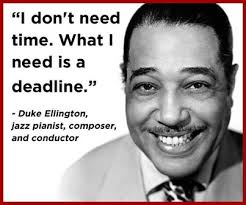 There is another rationale I find compelling for not overusing this accommodation and certainly for limiting the deadline extension when permitted. Often students ask for this accommodation when they’ve already missed several deadlines. The rule is that accommodations are not retroactive, period. So, it won’t undo what has been done. Furthermore, often allowing students who struggle with deadlines to begin with, the flexibility in putting them off even longer, only serves to dig them deeper into a hole with more piling up on top of them. This in turn exacerbates stress and anxiety.
Remember the access vs. success distinction. When students request flexibility in deadlines, they are often really asking because permitting flexibility is needed for success, not access. This is why these considerations are usually not appropriate as accommodations. Add on the reasonableness test, and we see that it is a rare instance where this accommodation should be awarded. This doesn’t mean that flexibility cannot be given (with limits), but that is typically more appropriately a discussion between student and professor (or class dean and professor) because it does not fall within the parameters of an accommodation.
We’ve focused on accommodations (access) quite a bit. Next week, we’ll shift topics to ones involving success — what we can do to help students with disabilities.
Q & A:
Given what has been discussed this week and last, why do our faculty members see flexibility in attendance and/or deadlines as an accommodation (as often as they do) on the Accommodations Memo they receive from students?
The short answer is that our college’s policies and procedures regarding these two accommodations have recently been revised to be in line with best practices. However, Student Accessibility Services will not revoke accommodations that have already been awarded to students prior to these updates. Given the new policies and procedures, these two accommodations will not be issued with the same frequency as has been in the past.
